
Summary
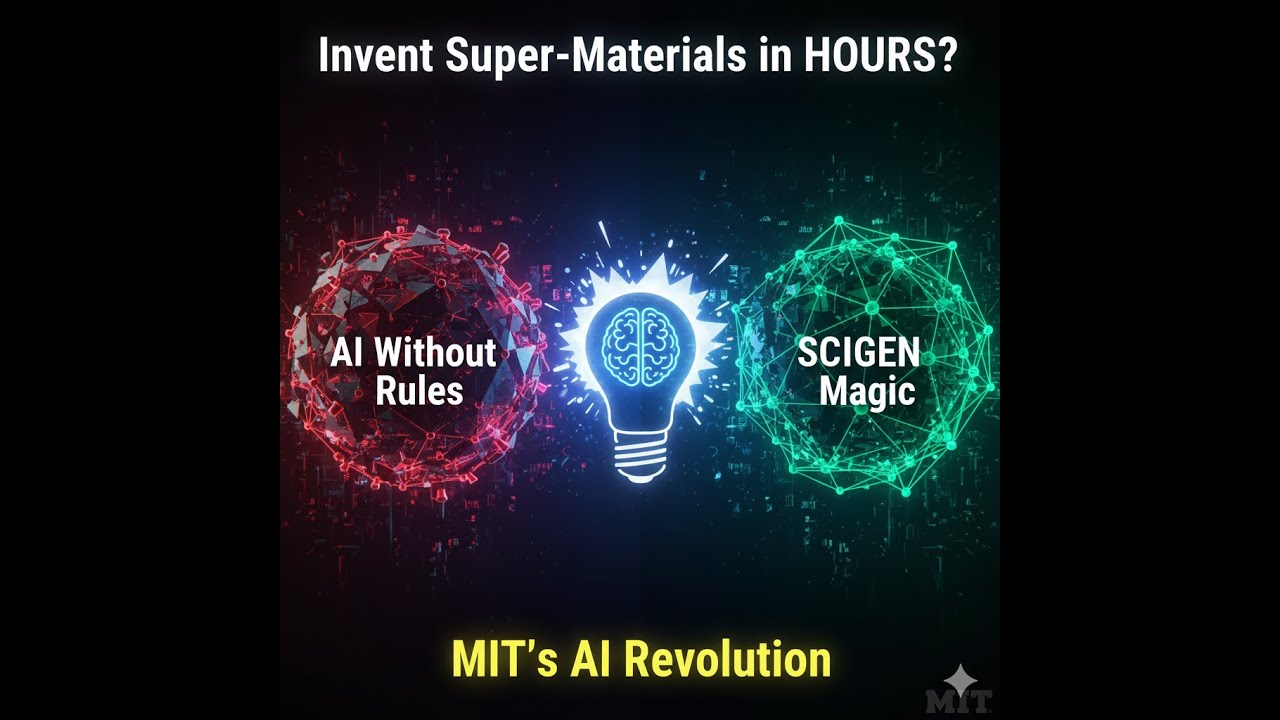
**SCIGEN**, a novel tool developed by researchers at **MIT**, is set to revolutionize the way generative AI models create materials, particularly those with exotic properties suitable for applications in **quantum computing**. By implementing specific design rules, SCIGEN allows AI to generate millions of candidate materials, including complex geometric lattice structures like the **kagome lattice**, which have potential uses in advanced technologies. This innovation not only enhances the efficiency of material discovery but also opens new avenues for research in fields that rely on cutting-edge materials. The implications of SCIGEN extend beyond mere efficiency; they could lead to breakthroughs in various sectors, including electronics and energy. As the demand for innovative materials grows, SCIGEN positions itself as a critical tool for researchers aiming to push the boundaries of what is possible in material science.
Key Takeaways
- SCIGEN is a new tool developed by MIT to enhance generative AI's capabilities in material discovery.
- The tool allows researchers to impose design rules on AI models, increasing the likelihood of creating breakthrough materials.
- Applications of SCIGEN include generating materials with properties suitable for quantum computing.
- While the tool shows promise, its long-term effectiveness and reliability remain to be validated.
- The intersection of AI and materials science could lead to significant advancements in various industries.
Balanced Perspective
SCIGEN represents a significant advancement in the field of generative AI and materials discovery. By allowing researchers to impose design rules on AI models, it enhances the likelihood of producing materials with specific desired properties. The tool's application to generate complex lattice structures, such as the **kagome lattice**, indicates a focused approach to material creation. However, while the tool shows promise, its long-term impact on the field remains to be fully understood, as practical applications and real-world testing will be crucial in validating its effectiveness. [[artificial-intelligence|AI]] [[MIT|MIT]]
Optimistic View
The introduction of **SCIGEN** could herald a new era in materials science, enabling researchers to discover materials that were previously unimaginable. With its ability to generate millions of candidates, this tool could significantly accelerate the pace of innovation in **quantum computing** and other high-tech fields. The potential for creating materials with tailored properties means that industries could see transformative advancements, leading to more efficient technologies and sustainable solutions. This is a thrilling time for material science, as SCIGEN could unlock discoveries that change the way we interact with technology. [[quantum-computing|Quantum Computing]] [[materials-science|Materials Science]]
Critical View
Despite the excitement surrounding SCIGEN, there are valid concerns regarding its implications for the field of materials science. The reliance on AI-generated materials raises questions about the reproducibility and reliability of these materials in practical applications. Furthermore, the complexity of quantum properties may not be easily captured by AI models, leading to potential oversights in material behavior. As researchers rush to adopt this technology, there is a risk of overlooking the fundamental principles of material science, which could result in failures or inefficiencies down the line. [[quantum-computing|Quantum Computing]] [[research-ethics|Research Ethics]]
Source
Originally reported by MIT News